Norwegian Interior Design Traditions: Rosemaling, Stabbur, and Modern Nordic Minimalism
Share
Norway's Unique Design Heritage
While we've explored Scandinavian design broadly and touched on Swedish Lagom, Norwegian interior design deserves its own spotlight. Norway's design traditions are shaped by dramatic landscapes, long winters, and a cultural appreciation for craftsmanship that runs deep through generations. At NOIR.DESIGN, we draw inspiration from Norwegian design principles—particularly the balance between ornate folk traditions and stark modern minimalism.

Norwegian design isn't monolithic. It encompasses richly decorated rosemaling (decorative painting), the rustic functionality of mountain cabins (hytter), and the clean minimalism of contemporary Norwegian designers. Understanding these traditions provides insight into how Norway has influenced global design while maintaining its distinct identity.
The Norwegian Landscape: Design's Greatest Influence
You cannot understand Norwegian design without understanding Norwegian geography. The country's dramatic fjords, mountains, forests, and coastline profoundly shape how Norwegians approach their interiors.
Long, Dark Winters: With winter days offering only a few hours of daylight in much of Norway, interiors must compensate for limited natural light. This drives the Norwegian preference for white walls, light wood, and strategic lighting—creating brightness and warmth when the outside world is dark and cold.

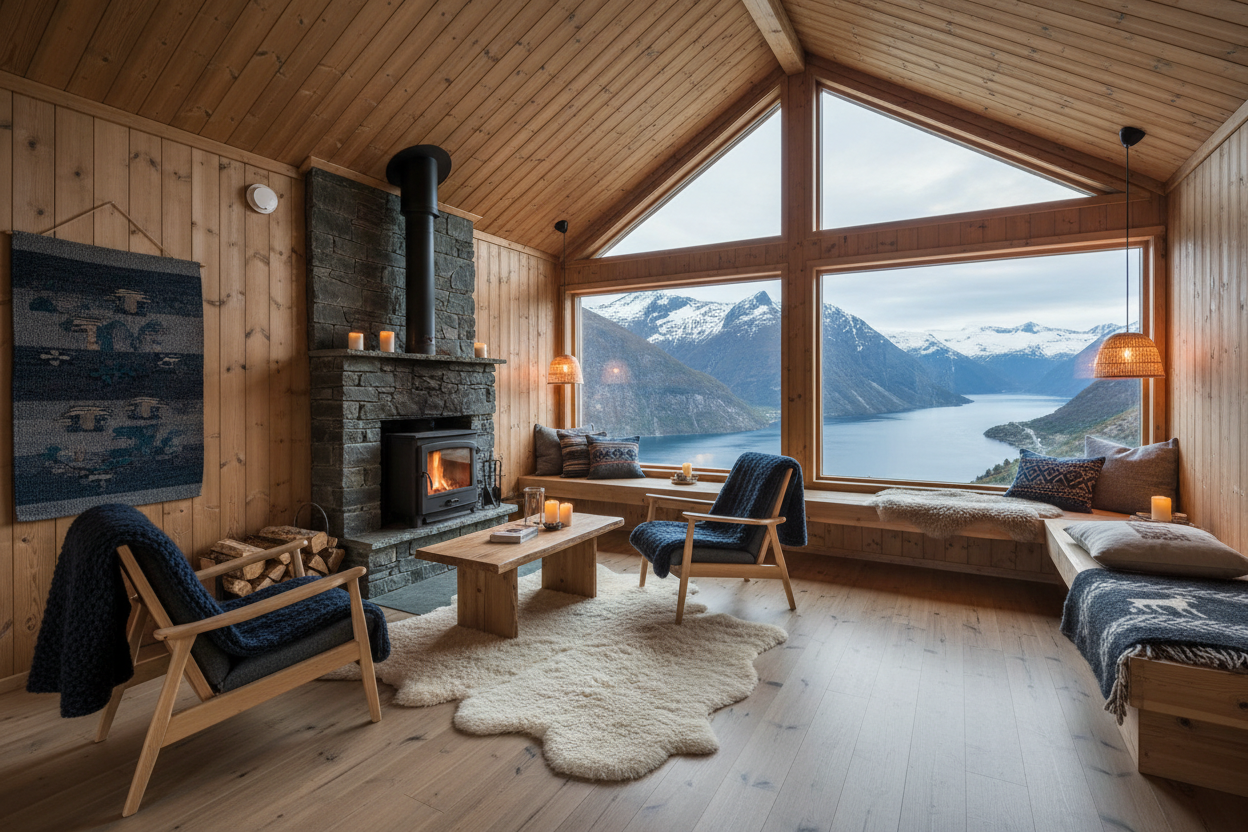
Dramatic Natural Beauty: Norway's spectacular landscapes mean interiors often serve as frames for views rather than competing with them. Large windows, minimal window treatments, and restrained decoration allow the landscape to be the primary visual focus.
Harsh Climate: Extreme weather demands practical, durable materials and designs. Norwegian interiors prioritize function and longevity—furniture and accessories must withstand heavy use and last for generations.
Connection to Nature: Despite (or because of) the harsh climate, Norwegians maintain a deep connection to nature. This manifests in interiors through natural materials, organic forms, and biophilic design principles.
Traditional Norwegian Design Elements
Rosemaling: Norway's Decorative Art
Rosemaling ("rose painting") is Norway's most distinctive folk art tradition—intricate floral designs painted on furniture, walls, and household objects.
Historical Context: Rosemaling flourished in the 18th and 19th centuries, particularly in rural areas. It represented status and celebration—the more elaborate the rosemaling, the wealthier the family. Different regions developed distinct styles, from the bold, symmetrical designs of Telemark to the delicate, asymmetrical patterns of Hallingdal.
Characteristics: Flowing floral motifs, scrollwork, and acanthus leaves in vibrant colours—reds, blues, greens, and golds. The designs are ornate and exuberant, a stark contrast to the minimalism we associate with modern Scandinavian design.

Modern Application: While full rosemaling is rare in contemporary interiors, its influence persists. Modern Norwegian designers sometimes incorporate subtle floral motifs or use rosemaling-inspired colours as accents. The tradition reminds us that Norwegian design isn't solely about minimalism—there's a rich decorative heritage as well.
NOIR.DESIGN Perspective: While our aesthetic leans toward minimalism, we appreciate rosemaling's celebration of craftsmanship and natural motifs. Our curved, organic forms echo rosemaling's flowing lines in a contemporary, restrained way.
Stabbur: The Traditional Norwegian Storehouse
The stabbur is a traditional elevated storehouse found on Norwegian farms—a practical structure that has influenced Norwegian design thinking.
Function: Raised on pillars to protect contents from moisture and rodents, the stabbur stored food, textiles, and valuables. It represents Norwegian pragmatism—form following function with no unnecessary ornamentation.
Construction: Built from logs with minimal processing, often featuring decorative carved details around doors and eaves. The construction showcases wood's natural character while demonstrating skilled craftsmanship.
Design Influence: The stabbur embodies principles that persist in Norwegian design: durability, functionality, honest materials, and respect for craftsmanship. Modern Norwegian furniture often reflects these same values.
The Hytte: Norwegian Mountain Cabin Culture
The hytte (cabin) is central to Norwegian culture and has profoundly influenced interior design.
Cultural Significance: Approximately half of Norwegian families own or have access to a hytte. These mountain or coastal cabins serve as retreats from urban life, places to reconnect with nature and family.
Traditional Hytte Interiors: Characterized by extensive use of natural wood (walls, ceilings, floors), simple furniture, minimal decoration, and focus on functionality. Everything serves a purpose; nothing is purely decorative. Warmth comes from wood itself, textiles (wool blankets, sheepskins), and the fireplace.
Modern Evolution: Contemporary hytter blend traditional elements with modern comfort. Large windows frame views, open-plan layouts create spaciousness, and high-quality materials ensure durability. The aesthetic remains rooted in natural materials and simplicity.
Urban Influence: Hytte aesthetics increasingly influence urban Norwegian homes. City dwellers bring the cabin's warmth, natural materials, and simplicity into their apartments and houses, creating year-round connection to the hytte lifestyle.
Norwegian Color Palettes
Norwegian interiors employ distinctive colour approaches shaped by landscape and light conditions.
The White Foundation
Why White Dominates: White walls maximize light reflection during dark winters. They create a bright, airy foundation that makes spaces feel larger and more welcoming when natural light is scarce.
Not Stark White: Norwegians favour warm whites with subtle cream or grey undertones rather than brilliant, cool whites. These warmer whites feel cozier and more inviting—essential during long winters.
White as Canvas: White walls allow natural materials—wood, stone, textiles—to provide colour and texture. The white background makes these natural elements more prominent and appreciated.

Nature-Inspired Accent Colors
Deep Blues and Greens: Inspired by fjords, forests, and the northern lights, deep blues and greens appear as accent colours in textiles, ceramics, and occasional painted furniture. These colours ground spaces and provide visual weight against white backgrounds.
Warm Earth Tones: Terracotta, rust, and warm browns reference Norwegian landscapes—autumn forests, rocky coastlines, and traditional red-painted barns (the iconic "Norwegian red" or "Falu red").
Muted, Not Bright: Norwegian colour palettes tend toward muted, sophisticated tones rather than bright, saturated colours. This restraint aligns with the broader Scandinavian aesthetic while reflecting Norway's often misty, atmospheric landscapes.
Wood as Color
In Norwegian interiors, wood isn't just a material—it's a primary colour element.
Light Woods: Pine, birch, and light oak dominate traditional and contemporary Norwegian interiors. These pale woods maximize light reflection and create the airy feel Norwegians prize. Our ash pieces align perfectly with this tradition.
Contrast Woods: Darker woods like walnut or stained oak provide accent and contrast. Used sparingly, they create visual interest without darkening the space. Our two-tone oak and walnut pieces embody this Norwegian approach to wood contrast.
Natural Finish: Norwegians prefer wood in its natural state or with minimal finishing. Clear oils that enhance grain without altering colour are standard—exactly the approach we take with our Osmo and Rubio Monocoat finishes.
Norwegian Furniture and Craftsmanship Traditions
Historical Furniture Making
Kubbestol (Log Chair): Traditional Norwegian chairs carved from single logs. These demonstrate Norwegian woodworking skill and the principle of creating maximum utility from minimal material. The kubbestol's honest construction and functional form influence contemporary Norwegian furniture design.
Kiste (Chest): Decorated storage chests were essential furniture in Norwegian homes, often featuring rosemaling or carved details. They served multiple purposes—storage, seating, and status symbols. The kiste represents Norwegian practicality combined with decorative craftsmanship.
Built-In Furniture: Norwegian homes traditionally featured extensive built-in furniture—benches, beds, storage—maximizing space efficiency in small homes. This tradition of integrated, space-saving design persists in contemporary Norwegian interiors.
Modern Norwegian Designers
Norway has produced influential modern designers who've shaped global design while maintaining Norwegian identity.
Peter Opsvik: Creator of the iconic Tripp Trapp chair and other ergonomic furniture. His work embodies Norwegian values: functionality, durability, and thoughtful design that improves daily life.
Torbjørn Afdal: Mid-century designer known for rosewood furniture that balanced Scandinavian minimalism with warmth and sophistication. His work shows how Norwegian design can be both restrained and luxurious.
Anderssen & Voll: Contemporary design duo creating furniture, lighting, and accessories that feel distinctly Norwegian—simple, functional, and rooted in natural materials while being thoroughly modern.
Norwegian Textile Traditions
Textiles play a crucial role in Norwegian interiors, providing warmth, colour, and cultural connection.
Wool: The Essential Material
Practical Necessity: Norway's cold climate makes wool essential. Wool blankets, throws, and cushions provide physical warmth while adding textural softness to wood-dominated interiors.
Traditional Patterns: Norwegian knitting and weaving traditions feature geometric patterns (selburose, eight-petal rose) and stripes. These patterns appear in modern textiles, connecting contemporary interiors to cultural heritage.
Natural Colors: Traditional Norwegian wool textiles use natural, undyed wool in shades of white, grey, brown, and black. This natural palette aligns with contemporary minimalist aesthetics while honouring tradition.
Sheepskin and Fur
Warmth and Texture: Sheepskins draped over chairs or placed on floors add warmth and tactile luxury. They're practical (insulating) and beautiful, embodying Norwegian design's fusion of function and aesthetics.
Natural Material: Using animal hides connects Norwegian interiors to the country's farming and hunting traditions. It's an honest, sustainable material that ages beautifully.
Lighting in Norwegian Design
Given Norway's extreme seasonal light variations, lighting design is particularly important.
Maximizing Natural Light
Large Windows: Norwegian homes feature generous windows to capture every bit of available daylight. Window treatments are minimal or absent—nothing should block precious natural light.
Reflective Surfaces: White walls, light wood, and strategic use of mirrors maximize light reflection, making spaces feel brighter during dark winters.
Window Placement: Windows are positioned to frame views and capture light from multiple directions. The landscape becomes part of the interior design.
Artificial Lighting Strategy
Layered Lighting: Norwegian interiors use multiple light sources at different heights—overhead, task, and ambient—creating warm, flexible lighting that compensates for limited daylight.
Warm Color Temperature: Lighting tends toward warm tones (2700-3000K) that create cozy, inviting atmospheres during long, dark evenings.
Candles: Norwegians are among the world's highest per-capita candle consumers. Candlelight provides warm, flickering light that creates hygge-like coziness. Candles are everyday items, not reserved for special occasions.
The Norwegian Concept of "Koselig"
Koselig is Norway's equivalent to Danish hygge—a sense of coziness, warmth, and contentment.
Creating Koselig: Achieved through soft lighting (candles, warm lamps), comfortable textiles (wool blankets, sheepskins), warm drinks, and gathering with loved ones. It's about creating sanctuary from harsh weather and dark winters.
Design Implications: Koselig influences Norwegian interior design toward warmth and comfort. While aesthetics are important, a space must feel koselig to be successful. This prevents Norwegian minimalism from becoming cold or austere.
Year-Round Relevance: Unlike hygge, which is often associated primarily with winter, koselig is relevant year-round. Summer koselig might involve outdoor gatherings and light textiles, while winter koselig emphasizes warmth and candlelight.
Norwegian Minimalism vs. Swedish Minimalism
While both countries embrace minimalism, Norwegian and Swedish approaches differ subtly.
Norwegian: Tends toward warmer minimalism with more wood, textiles, and connection to rustic traditions. There's greater acceptance of texture and natural material variation. The hytte aesthetic influences even urban spaces.
Swedish: Often cooler and more refined, with greater emphasis on white, grey, and perfectly curated aesthetics. Swedish minimalism can feel more designed and intentional, while Norwegian minimalism feels more organic and lived-in.
Both: Share commitment to functionality, quality, natural materials, and light maximization. The differences are subtle but reflect each country's distinct culture and landscape.
Applying Norwegian Design Principles
How can you incorporate Norwegian design principles into your home, regardless of location?
Start with Natural Materials
Wood Foundation: Use light wood extensively—floors, furniture, accessories. Our oak, ash, and maple pieces provide authentic Norwegian-style wood elements. The natural grain and colour create warmth without requiring extensive decoration.
Stone and Natural Fiber: Incorporate stone (countertops, fireplace surrounds) and natural fiber textiles (wool, linen, cotton). These materials ground spaces and provide textural variety.
Honest Expression: Let materials be what they are. Don't paint wood, don't cover stone, don't hide natural characteristics. Norwegian design celebrates material authenticity.
Embrace White Walls
Bright Foundation: Paint walls warm white to maximize light and create a neutral canvas for natural materials and textiles.
Ceiling Too: White ceilings make spaces feel taller and brighter. In Norwegian homes, even wood-clad ceilings are often painted white to enhance light.
Layer Textiles
Wool Blankets and Throws: Drape wool textiles over furniture for warmth and texture. Choose natural colours or traditional Norwegian patterns.
Sheepskins: Place sheepskins on chairs or floors for tactile luxury and visual warmth.
Cushions: Use cushions in muted blues, greens, or earth tones to add colour without overwhelming the space.
Prioritize Lighting
Multiple Sources: Install varied lighting at different heights. Avoid relying solely on overhead lighting.
Warm Bulbs: Use warm-toned bulbs (2700-3000K) to create cozy, inviting light.
Candles: Incorporate candles into daily life, not just special occasions. The warm, flickering light creates instant koselig.
Choose Functional, Quality Pieces
Durability: Invest in well-made furniture and accessories that will last decades. Norwegian design values longevity over trends.
Function First: Every piece should serve a clear purpose. Our wall hooks, coat racks, and towel rails embody this principle—beautiful but fundamentally functional.
Timeless Design: Choose simple, classic forms that won't feel dated. Norwegian design favours timeless over trendy.
NOIR.DESIGN and Norwegian Traditions
Our design philosophy aligns closely with Norwegian principles:
Natural Materials: We work exclusively with premium hardwoods, celebrating their natural grain, colour, and character—exactly as Norwegian design demands.
Honest Finishing: Our finishing process uses clear oils that enhance wood without hiding it. This transparency is fundamentally Norwegian.
Functional Forms: Every piece we create serves a clear purpose. Wall hooks hang coats, towel rails hold towels, curtain holdbacks manage curtains. Beauty emerges from function, not decoration.
Durability: We build pieces to last generations, using traditional joinery and premium materials. This longevity reflects Norwegian values of quality and sustainability.
Minimalist Aesthetic: Our clean lines and restrained forms align with Norwegian minimalism while our use of contrasting woods adds the warmth and texture that makes Norwegian interiors inviting.
Why Norway Loves British-Made Wooden Hooks
We've explored this connection in our post on why Norway loves British-made wooden hooks, but it bears repeating: Norwegian customers appreciate our work because it aligns with their design values.
Shared Craftsmanship Traditions: Both British and Norwegian cultures value skilled craftsmanship and quality materials. Our approach to woodworking resonates with Norwegian appreciation for well-made objects.
Natural Materials: Our commitment to premium hardwoods aligns perfectly with Norwegian preference for natural, honest materials.
Functional Minimalism: Our designs are minimal but warm, functional but beautiful—exactly what Norwegian design demands.
Conclusion: Learning from Norwegian Design
Norwegian interior design offers valuable lessons for creating spaces that are both beautiful and livable, minimal yet warm, contemporary yet rooted in tradition.
The Norwegian approach teaches us to:
- Respect and celebrate natural materials
- Prioritize function without sacrificing beauty
- Create warmth through textiles and lighting, not clutter
- Invest in quality pieces that last generations
- Connect interiors to landscape and nature
- Balance minimalism with coziness (koselig)
At NOIR.DESIGN, we're inspired by Norwegian design's ability to be simultaneously spare and warm, modern and traditional, functional and beautiful. Our hardwood pieces embody these principles, bringing Norwegian-inspired design values into homes around the world.
Whether you're creating a full Norwegian-inspired interior or simply incorporating elements of Norwegian design, the principles remain the same: choose quality over quantity, function over decoration, and natural materials over artificial ones. Let light in, layer textiles for warmth, and create spaces that feel koselig—welcoming, comfortable, and authentically you.
That's the Norwegian way, and it's the NOIR.DESIGN way: honest materials, skilled craftsmanship, and designs that honour both tradition and contemporary life.